Signs of termites in your house and treatment options
Mud tubes, hollow wood, swarmers after rain: how to spot termites (anay) early, where to check, and what termite treatment costs.
The main signs of termites (anay) are mud tubes on walls, wood that sounds hollow when tapped, winged swarmers or dropped wings after rain, and fine powder or blistered paint on wood. If you see any of these, do not spray or break anything: take photos and book an inspection by a pest control company.
Termites work hidden inside wood, walls and ceilings, so damage often goes unnoticed until a door frame gives way. The warm, humid Philippine climate lets them stay active all year. Catching them early keeps the treatment and the repairs small.
Signs to look for
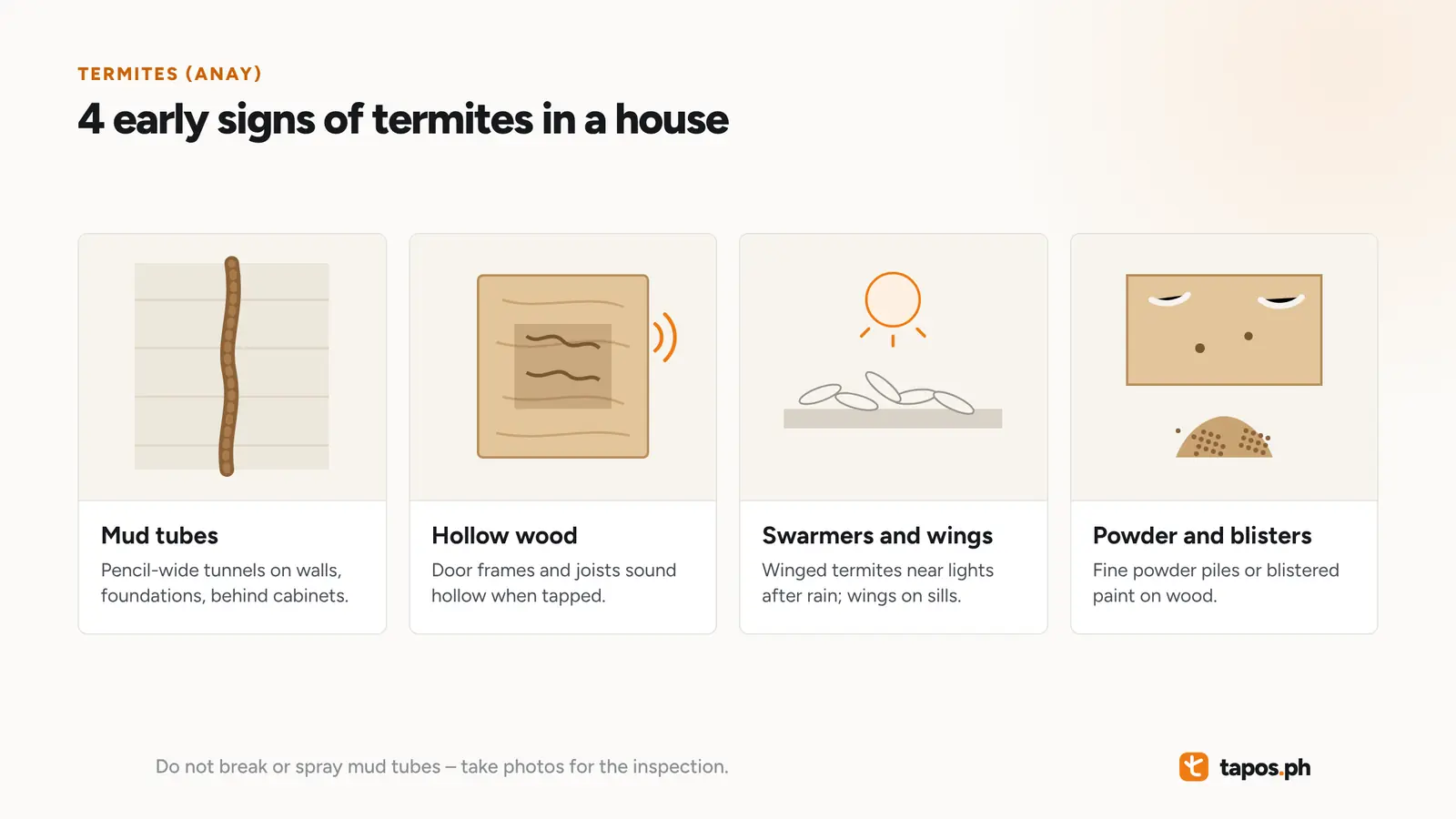
- Mud tubes. Brown tunnels about the width of a pencil running up walls, foundations, posts or behind cabinets. Subterranean termites build them to travel from the soil to wood without drying out.
- Hollow-sounding wood. Door frames, cabinets, stairs and ceiling joists that sound papery when tapped, or where a screwdriver sinks in easily. The surface can look fine while the inside is eaten away.
- Swarmers and wings. Winged termites (gamu-gamo) flying around lights after rain, especially at the start of the rainy season, and small piles of identical dropped wings on window sills and floors.
- Powder and blisters. Small piles of fine powder or tiny grains below wood, and paint or wallpaper that bubbles or looks wavy.
- Other clues. Doors and windows that suddenly stick, soft or sagging wooden floors and ceilings (kisame), and chewed cardboard boxes or books in storage.
Where and how to check
A quick check of a house takes about 30 minutes. Bring a flashlight, a phone camera and a screwdriver.
- Kitchen and bathroom cabinets, especially under the sink, where wood stays damp.
- Ground-floor door frames and baseboards. Tap them with the screwdriver handle and listen for hollow spots.
- Wooden floors and stairs. Look for soft spots and gaps.
- Ceiling and roof framing. Look for sagging panels, water stains and mud lines along the joists.
- Storage areas. Check boxes, books and old furniture kept against walls or on the floor.
- Outside. Walk around the foundation. Look for mud tubes, wood touching soil, old stumps, fence posts and stacked lumber near the house.
Photograph everything you find, with something for scale, and note where it is. This helps the pest control company quote more accurately.
Termites or something else?
Flying ants also swarm after rain. Termite swarmers have a straight, thick waist, straight antennae and two pairs of wings of the same length. Ants have a pinched waist, bent antennae and front wings longer than the back wings. Fine powder can also come from wood borer beetles (bukbok). An inspection tells which one you have, and the treatment is different.
Treatment options
| Method | How it works | Best for |
|---|---|---|
| Soil treatment | Termiticide applied in the soil around and under the foundation, sometimes by drilling small holes through floor tiles or concrete, to create a barrier. | Active subterranean termites; new construction before the floor is poured. |
| Baiting system | Stations placed in the ground or on active spots. Termites carry the bait back and the colony is slowly eliminated. | Homes where drilling is hard; owners who want to target the colony. Slower, needs follow-up visits. |
| Wood treatment | Injection or spraying of affected and nearby wood. | Localized damage in furniture, frames, cabinets and roof timbers. |
Many companies combine methods: wood treatment for what is already infested, plus soil treatment or bait to stop new attacks. Badly damaged wood must still be replaced by a carpenter after treatment. Treatment stops the termites but does not restore the wood.
Routine spraying for ants and cockroaches does not reach a termite colony. If you only book general pest control, say clearly that you suspect termites.
What it costs and what to ask
Termite control typically costs ₱3,000–₱15,000+ per job, from a small area such as one cabinet or room to a whole house. For comparison, general pest control is usually ₱1,500–₱5,000 per visit. The price depends on:
- floor area and number of floors;
- the method, and how many follow-up visits it needs;
- how far the infestation has spread, especially into the roof or ceiling;
- access, such as drilling through tiles or working in a low ceiling space.
Before you agree, ask each company:
- Is the inspection free, and will you show me where the activity is?
- Which method do you recommend, and why for my house?
- Which chemical will you use, and how long should we stay out of treated rooms?
- How many visits are included?
- How long is the warranty, and what happens if termites come back during that time?
Get the scope, price and warranty in writing. Our guide on how to hire a home service pro covers permits, payment and checks for the day of the job.
Before and after the visit
- Do not spray or break the mud tubes. Store-bought spray kills only the termites you can see and makes the colony move to a new spot, which makes inspection harder.
- Clear access. Empty the cabinets and move boxes away from walls in the affected areas.
- Tell your neighbors or the building admin. In townhouses, rowhouses and condos, termites can spread between units. Many condos also require a work permit before treatment.
- Follow the safety instructions. Keep children and pets out of treated rooms for as long as the company says, and cover food and dishes.
- Reduce what attracts them. Fix leaks, keep wood and boxes off the ground, remove old stumps and lumber, and keep soil and mulch away from wooden walls.
Check the same spots again every few months, and after the first heavy rains each year. If you find new mud tubes during the warranty period, call the same company before paying anyone else.
If you have found signs of anay, you can describe the problem once on tapos to request up to 5 free quotes from pest control companies near you.
Frequently asked questions
Can I get rid of termites myself?
Store-bought sprays kill only the termites you see and usually make the colony move elsewhere in the house. Termiticides for soil and wood treatment should be applied by a licensed pest control company.
Is termite treatment safe for children and pets?
It is when the label and the company's instructions are followed. Ask which product will be used, keep children and pets out of treated rooms until the company says it is safe, and cover food, dishes and aquariums.
Do termites come back after treatment?
They can, especially if the colony was not reached or conditions such as damp wood and soil contact remain. This is why a written warranty with free re-treatment during the warranty period matters.
Should I buy a house with signs of termites?
Get a termite inspection and a repair estimate before you decide, and check the roof framing and ceiling. Use the treatment and repair cost in negotiating the price.