Clogged drain or toilet: what to try before calling a plumber
Safe steps for a barado sink, shower or toilet: hot water, plunger, sink trap, hair removal – plus what to avoid and when to call a plumber.
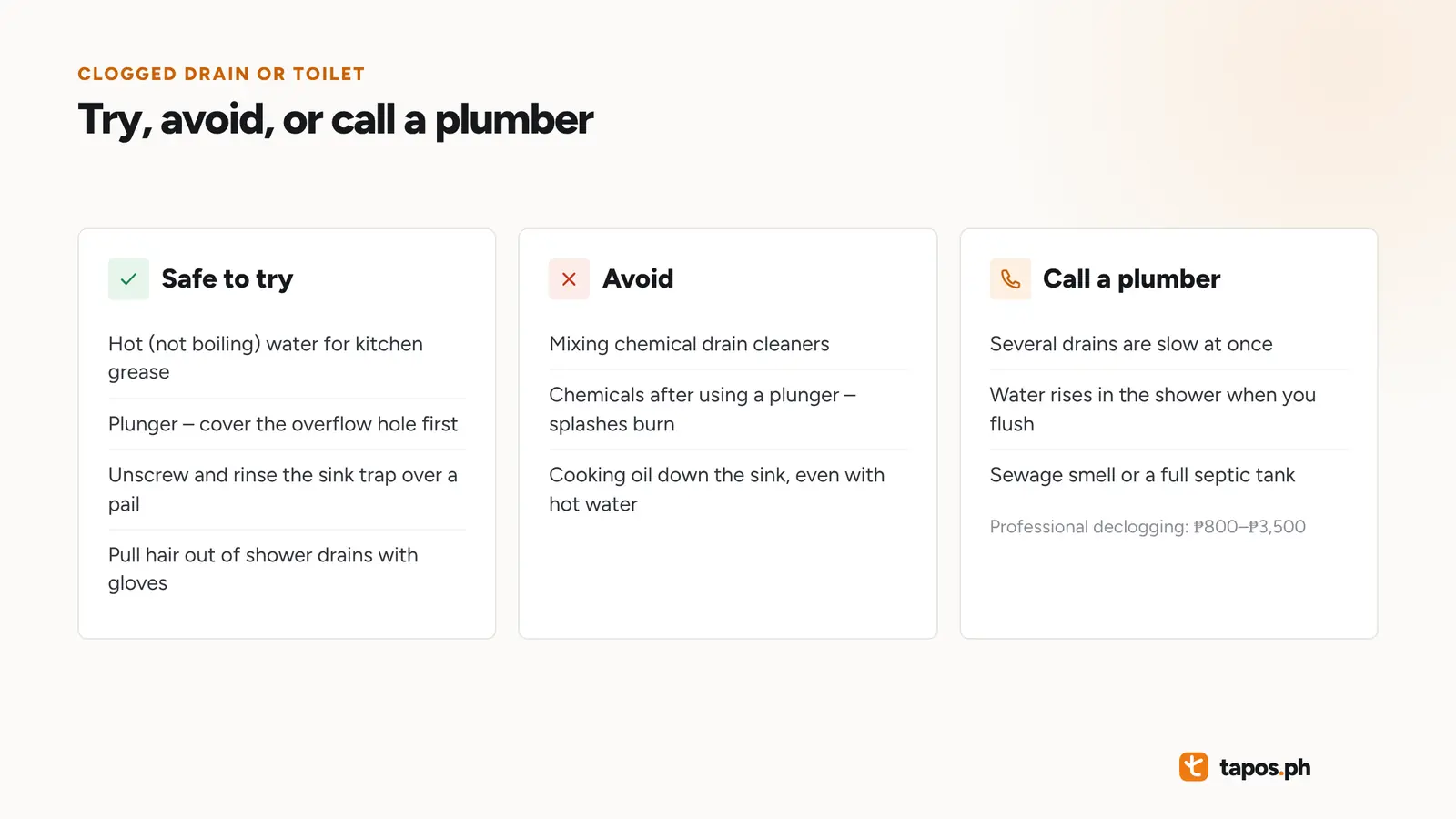
For a clogged (barado) sink, shower or toilet, start with hot (not boiling) water and a plunger, then clean the sink trap or pull out hair. If several drains are slow at once, water comes up in the shower when you flush, or you smell sewage, stop and call a plumber (tubero).
Most clogs in Philippine homes come from grease, hair, soap and food scraps. A clog close to the drain can often be cleared in 15–30 minutes. A clog deep in the main line needs a plumber with proper tools.
Find where the clog is
Before you try anything, check which drains are affected. This tells you whether it is a small, local clog or a bigger problem.
| What you see | Likely cause | What to do |
|---|---|---|
| One kitchen sink is slow | Grease and food in the trap or nearby pipe | Hot water, plunger, clean the trap |
| One shower or floor drain is slow | Hair and soap | Remove hair, then plunge |
| Toilet drains slowly, other drains are fine | Too much tissue or an object in the toilet | Flange plunger; do not keep flushing |
| Several drains are slow at the same time | Blocked main line or full septic tank | Call a plumber |
| Drains back up only during heavy rain | Outside drainage or main line overloaded | Wait for the rain to ease; call a plumber if it keeps happening |
If you live in a condo, tell the building admin first when more than one drain is affected. Units share vertical pipes, and the clog may be in the common line, which is the building's job to clear.
Safe things to try
Work from the gentlest method to the more hands-on one. Give each step a fair try before moving on.
- Hot water for kitchen grease. Pour a kettle of hot water slowly into the sink, in two or three rounds. Use hot, not boiling, water: boiling water can soften PVC pipes and loosen joints. This only helps with fresh grease, not with solid food or hair.
- A plunger. Use a cup plunger for sinks and floor drains, and a flange plunger (the one with a rubber sleeve at the bottom) for toilets. For a sink, cover the overflow hole with a wet cloth so the pressure goes into the clog. Keep a little water in the sink or bowl so the plunger seals, then push and pull firmly 10–15 times.
- Clean the trap under the sink. The U-shaped pipe under the sink catches most kitchen and bathroom sink clogs. Put a pail below it, unscrew the plastic nuts by hand, empty and rinse the trap, then screw it back and run water to check for drips.
- Remove hair from shower and floor drains. Lift the drain cover, wear gloves, and pull out the hair with your fingers or a cheap plastic drain hook from the hardware store. This alone fixes most slow shower drains.
For a toilet, do not flush again and again to "push it through". If the bowl is already high, one more flush can overflow onto the floor. Plunge first, and flush only when the water level has gone down.
What to avoid
- Mixing chemical drain cleaners. Different products can react and release dangerous fumes. Never pour a second product on top of the first.
- Using chemicals after plunging. If the chemical stays in the pipe and you plunge again, it can splash on your skin and eyes and burn.
- Pouring cooking oil down the sink. Hot water does not help; the oil cools and hardens further down the pipe. Let it cool, pour it into a bottle, and throw it away with your trash.
- Forcing metal tools into a toilet. A wire hanger can scratch the bowl and push the object deeper.
- Opening pipes beyond the sink trap. Joints inside walls and floors are easy to crack and hard to reseal.
When to call a plumber
Stop trying yourself and book professional declogging when:
- Several drains are slow at the same time. The main line may be blocked.
- Water comes back up in the shower or floor drain when you flush the toilet.
- There is a sewage smell inside the house, or the septic tank has not been emptied in years.
- You already used a chemical drain cleaner and the water is still standing. Tell the plumber which product you used, so they can protect themselves.
- The clog keeps coming back every few weeks. There may be a sagging pipe, roots, or a build-up of grease that only a machine can clear.
- Water leaks from under the sink or from the ceiling of the floor below.
What declogging costs
Professional declogging usually costs ₱800–₱3,500 per job. The price depends on:
- Where the clog is. A sink trap is quick; a blocked main line or a clog between the house and the septic tank takes longer.
- The equipment needed. A hand snake is cheaper than an electric drain machine.
- Access. Pipes behind tiles, under the floor or in a condo with work permits and limited working hours take more time.
- Extra repairs. If a pipe is cracked or a joint leaks, that is plumbing repair, usually ₱500–₱2,500 per job on top.
Ask the plumber to confirm the price before starting, and to tell you before doing anything outside the agreed job. Our checklist for hiring a home service pro covers what else to ask.
How to prevent the next clog
- Scrape plates into the trash before washing, and use a sink strainer in the kitchen.
- Collect used cooking oil in a bottle instead of the sink.
- Put a hair catcher on shower and floor drains, and clean it every few days.
- Flush only toilet paper. Wet wipes, sanitary pads and tissue packs do not break down.
- Run hot water through the kitchen sink once a week to keep grease from settling.
- Before the rainy and typhoon season, check that outside drains and canals near your house are clear of leaves and trash.
If the drain is still blocked after the safe steps, describe which drains are affected and what you already tried in one request on tapos, and compare quotes from plumbers who cover your area.
Frequently asked questions
Does baking soda and vinegar unclog a drain?
It may freshen a slightly slow drain, but it rarely clears a real clog of grease, hair or solid food. A plunger or cleaning the sink trap works better, and it is safer not to combine it with any chemical drain cleaner.
How long does professional declogging take?
A sink or shower clog near the drain is often cleared within an hour. A blocked main line, or one that needs an electric drain machine, can take a few hours.
Can a full septic tank cause slow drains?
Yes. When the septic tank is full, toilets and floor drains slow down and the house may smell of sewage. A plumber can check whether the clog is in the pipes or the tank needs to be emptied (siphoning).
Who pays for a clogged drain in a condo or rented house?
In a condo, clogs in the shared vertical pipes are usually handled by building maintenance, while clogs inside your unit are your responsibility. In a rented house it depends on the lease, so tell the landlord before booking a plumber.